The new technology utilizes reflective, see-through OLED panels that can be combined wtih augmented reality overlays powered by 3D cameras. You know, for shopping.
http://www.cnet.com/uk/news/samsung-shows-retail-ready-transparent-mirrored-oled/
Showing posts with label Samsung. Show all posts
Showing posts with label Samsung. Show all posts
Thursday, June 11, 2015


Thursday, June 04, 2015
VR demo & fireside chat with Amir Rubin, industry pioneer & CEO of Sixense
http://www.youtube.com/watch?v=48dt9Q3FJYs&sns=em
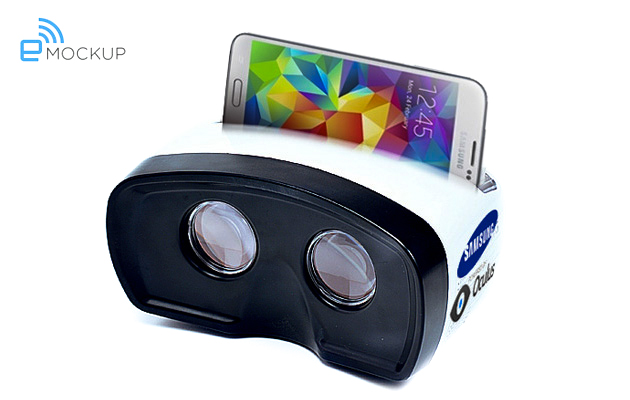
#TWiSTLive!! Virtual reality is an exciting & hotly debated space. Its potential is massive, but will it ever really "arrive"? In today's live show, recorded at Samsung Global Innovation Center, Jason answers this question with a resounding YES, as he demos the latest & greatest VR and hosts a riveting fireside chat with Amir Rubin, VR pioneer & CEO of Sixense, a premiere virtual reality platform. After a lively demo of Sixense's cutting-edge, award-winning products, Jason talks with Amir about his inspirations, the state of the field, and what's coming. We learn why VR is not just about gaming but about every industry (esp. healthcare, education), why motion sickness is no longer an issue, how technologies like 3D printing help VR immensely, how developers are building amazing applications on the Sixense platform, how every phone going forward will be VR ready, why VR is so effective in training for high-risk jobs like welders & pilots, why service providers will give VR headsets away for free, how VR is going to be a new way for creative people to monetize their skills, how movie studios can use VR for you to actually experience being the super hero, why the biggest challenge facing VR is educating consumers -- and much much more!
Full show notes: http://goo.gl/v3JaLc
#TWiSTLive!! Virtual reality is an exciting & hotly debated space. Its potential is massive, but will it ever really "arrive"? In today's live show, recorded at Samsung Global Innovation Center, Jason answers this question with a resounding YES, as he demos the latest & greatest VR and hosts a riveting fireside chat with Amir Rubin, VR pioneer & CEO of Sixense, a premiere virtual reality platform. After a lively demo of Sixense's cutting-edge, award-winning products, Jason talks with Amir about his inspirations, the state of the field, and what's coming. We learn why VR is not just about gaming but about every industry (esp. healthcare, education), why motion sickness is no longer an issue, how technologies like 3D printing help VR immensely, how developers are building amazing applications on the Sixense platform, how every phone going forward will be VR ready, why VR is so effective in training for high-risk jobs like welders & pilots, why service providers will give VR headsets away for free, how VR is going to be a new way for creative people to monetize their skills, how movie studios can use VR for you to actually experience being the super hero, why the biggest challenge facing VR is educating consumers -- and much much more!
Full show notes: http://goo.gl/v3JaLc
Thursday, November 13, 2014
Saturday, May 31, 2014
Thursday, May 03, 2012
Researcher Causes Endless Restart Loop on Samsung TV's
https://threatpost.com/en_us/blogs/researcher-causes-endless-restart-loop-samsung-tvs-042412
Italian security researcher Luigi Auriemma was trying to play a trick on his brother when he accidentally discovered two vulnerabilities in all current versions of Samsung TVs and Blu-Ray systems that could allow an attacker to gain remote access to those devices.
Auriemma claims that the vulnerabilities will affect all Samsung devices with support for remote controllers, and that the vulnerable protocol is on both TVs and Blu-Ray enabled devices.
One of the bugs leads to a loop of endless restarts while the other could cause a potential buffer overflow.
Auriemma discovered the issues accidentally. He told Threatpost via email that he was trying to play a trick on his brother. He only wanted to send a remote controller request with a funny message, but he ended up nearly destroying the TV.
To exploit Auriemma’s vulnerabilities requires only that the devices are connected to a wi-fi network.
As background, Auriemma explains that when the device receives a controller packet it displays message informing users that a new ‘remote’ has been detected, and prompts the user to ‘allow’ or ‘deny’ access. Included with this remote packet is a string field used for the name of device. Auriemma found that if he altered the name string to contain line feed and other invalid characters, the device would enter an endless loop.
Auriemma claims that nothing really happens for the first five seconds, but then he lost control of the TV, both manually on the control panel and with the remote. Then after another five seconds, he claims, the TV automaticall restarts. Then the process repeats itself forever, even after unplugging the TV. Eventually, Auriemma managed to reset the TV in service mode. He writes that users can avoid the situation altogether by hitting ‘exit’ when prompted to ‘allow’ or ‘deny’ the new remote device.
As for the buffer overflow, Auriemma determined that he could crash devices by setting the MAC address to a long string. He is only guessing that this is a buffer overflow vulnerability, and he told Threatpost via email that the vulnerability would be much more “attractive” if it was in fact a buffer overflow vulnerability.
“The bugs have been tested on a d6000 and d6050 TV, but it's highly possible that many of the Samsung devices supporting this protocol are vulnerable because d6xxx is a recent TV and usually these 'core' components are like libraries shared with other devices that make use of the same protocol,” he said via email.
Auriemma claims there is no fix for these bugs because he was unable to report the bugs to Samsung. He has also received no word from Samsung. He claims that Samsung doesn’t even have a channel through which to report these types of bugs.
Italian security researcher Luigi Auriemma was trying to play a trick on his brother when he accidentally discovered two vulnerabilities in all current versions of Samsung TVs and Blu-Ray systems that could allow an attacker to gain remote access to those devices.
Auriemma claims that the vulnerabilities will affect all Samsung devices with support for remote controllers, and that the vulnerable protocol is on both TVs and Blu-Ray enabled devices.
One of the bugs leads to a loop of endless restarts while the other could cause a potential buffer overflow.
Auriemma discovered the issues accidentally. He told Threatpost via email that he was trying to play a trick on his brother. He only wanted to send a remote controller request with a funny message, but he ended up nearly destroying the TV.
To exploit Auriemma’s vulnerabilities requires only that the devices are connected to a wi-fi network.
As background, Auriemma explains that when the device receives a controller packet it displays message informing users that a new ‘remote’ has been detected, and prompts the user to ‘allow’ or ‘deny’ access. Included with this remote packet is a string field used for the name of device. Auriemma found that if he altered the name string to contain line feed and other invalid characters, the device would enter an endless loop.
Auriemma claims that nothing really happens for the first five seconds, but then he lost control of the TV, both manually on the control panel and with the remote. Then after another five seconds, he claims, the TV automaticall restarts. Then the process repeats itself forever, even after unplugging the TV. Eventually, Auriemma managed to reset the TV in service mode. He writes that users can avoid the situation altogether by hitting ‘exit’ when prompted to ‘allow’ or ‘deny’ the new remote device.
As for the buffer overflow, Auriemma determined that he could crash devices by setting the MAC address to a long string. He is only guessing that this is a buffer overflow vulnerability, and he told Threatpost via email that the vulnerability would be much more “attractive” if it was in fact a buffer overflow vulnerability.
“The bugs have been tested on a d6000 and d6050 TV, but it's highly possible that many of the Samsung devices supporting this protocol are vulnerable because d6xxx is a recent TV and usually these 'core' components are like libraries shared with other devices that make use of the same protocol,” he said via email.
Auriemma claims there is no fix for these bugs because he was unable to report the bugs to Samsung. He has also received no word from Samsung. He claims that Samsung doesn’t even have a channel through which to report these types of bugs.
Friday, April 06, 2012
Stolen Samsung AMOLED Display Technology
Wow, I look forward to reading about the details. It's like out of some novel.
11 Arrested for Stealing, Selling Samsung Display Technology
http://www.wired.com/gadgetlab/2012/04/11-arrested-for-stealing-selling-samsung-display-technology
Stolen Samsung AMOLED technology sold to rival, 11 suspects arrested
http://www.bgr.com/2012/04/05/stolen-samsung-amoled-technology-sold-to-rival-11-suspects-arrested/
11 Arrested for Stealing, Selling Samsung Display Technology
http://www.wired.com/gadgetlab/2012/04/11-arrested-for-stealing-selling-samsung-display-technology
Stolen Samsung AMOLED technology sold to rival, 11 suspects arrested
http://www.bgr.com/2012/04/05/stolen-samsung-amoled-technology-sold-to-rival-11-suspects-arrested/
Wednesday, January 18, 2012
Samsung Reinvents Windows (Not the OS) With Touchscreen Display
I did a post on this earlier:
http://videotechnology.blogspot.com/2012/01/ces-2012-transparent-samsung-smart.html
From Slashdot:
http://videotechnology.blogspot.com/2012/01/ces-2012-transparent-samsung-smart.html
From Slashdot:
Samsung Reinvents Windows (Not the OS) With Touchscreen Display
Posted by Soulskill
from the and-you-thought-they-were-expensive-to-break-now dept.
from the and-you-thought-they-were-expensive-to-break-now dept.
An anonymous reader writes
"If you want a large, interactive display on your wall, typically you have to make space for it by moving any pictures out of the way, and finding room next to any shelves or lighting you have installed. Samsung's idea is to remove that problem by creating a transparent display that replaces an actual window, or at least sit over the top of one. The display uses ambient light during the day and then can switch over to a more traditional black background as a night time mode. If you want to shut the daylight out it has virtual blinds you can draw to help darken a room. And from the outside you just like you are tapping your window as none of the graphics can be seen. Yes, your neighbors will talk."
"If you want a large, interactive display on your wall, typically you have to make space for it by moving any pictures out of the way, and finding room next to any shelves or lighting you have installed. Samsung's idea is to remove that problem by creating a transparent display that replaces an actual window, or at least sit over the top of one. The display uses ambient light during the day and then can switch over to a more traditional black background as a night time mode. If you want to shut the daylight out it has virtual blinds you can draw to help darken a room. And from the outside you just like you are tapping your window as none of the graphics can be seen. Yes, your neighbors will talk."
Sunday, July 24, 2011
Samsung SP-H03 Picro Projector


Thursday, June 16, 2011
Samsung Chromebook Series 5
Samsung Chromebook Series 5 Review & Rating | PCMag.com
Video is the future! It's one of the few things I am sure of.
You would think Chrome OS out the gate would focus on that first and foremost. Everything else being far easier and less demanding other the maybe 3D graphics rendering.
There have been some improvements since Google debuted Chrome OS in the CR-48. For one, Flash support, particularly high-definition videos from YouTube and Hulu, has reaped the benefits of hardware acceleration. Videos played back smoothly and lag-free for the most part, but I would have liked Chrome OS to default to a better video quality than 360p . You have to manually adjust to a higher quality setting. When I say HD support, I really mean 720p max (1080p videos choked in YouTube).
A new media player is also included with Chrome OS plays back actual video and music files, as opposed to streaming them from a Web-based service like Amazon's Cloud Player, Pandora, Slacker, etc. But it's very primitive and the media files will have to come from an external device, such as a USB storage devices or an SD card (through the 4-in-1 media card slot). Chrome OS recognizes external storage devices almost immediately, and you browse through files and folders like you would with Windows. The media player handled 1080p MP4 video files and most audio formats very well, even those that were encoded at high bit-rates. But it also left out a bunch of video formats: The media player isn't compatible with mpeg, AVI, WMV video files, and certainly not Blu-ray.
A new media player is also included with Chrome OS plays back actual video and music files, as opposed to streaming them from a Web-based service like Amazon's Cloud Player, Pandora, Slacker, etc. But it's very primitive and the media files will have to come from an external device, such as a USB storage devices or an SD card (through the 4-in-1 media card slot). Chrome OS recognizes external storage devices almost immediately, and you browse through files and folders like you would with Windows. The media player handled 1080p MP4 video files and most audio formats very well, even those that were encoded at high bit-rates. But it also left out a bunch of video formats: The media player isn't compatible with mpeg, AVI, WMV video files, and certainly not Blu-ray.
Video is the future! It's one of the few things I am sure of.
You would think Chrome OS out the gate would focus on that first and foremost. Everything else being far easier and less demanding other the maybe 3D graphics rendering.
Wednesday, June 01, 2011
Samsung files LCD patent suit against AU Optronics
Samsung files LCD patent suit against AU Optronics | Reuters
(Reuters) - Samsung Electronics Co said on Thursday it had filed a complaint with the U.S. International Trade Commission against Taiwan's AU Optronics Corp and some of its customers for importing and selling flat-screen devices that it says infringe a number of its patents.
Samsung, which vies for the top flat-screen position with local rival LG Display, said in a statement that it is seeking an order prohibiting the import and sale of the infringing LCD devices such as televisions, computer monitors and notebooks.
The South Korean firm said it had also filed two similar suits in U.S. District Court of Delaware and the District Court for the Northern District of California.
"To protect its investment and customers, Samsung has -- and will continue -- to take action against any unauthorized use of its patented technology," it said in a statement.
AU Optronics was not immediately available for comment.
Samsung, Asia's most valuable technology company with around $137 billion in market value, is in a separate legal battle with Apple over mobile patent infringements.
Samsung counter-sued Apple in April after the Cupertino, California-based firm alleged that Samsung's smartphones and tablets "slavishly" copied its products.
By 0045 GMT (8:45 p.m. EDT), shares in Samsung fell 2.5 percent, lagging a 1.8 percent drop in the wider market.
(Reuters) - Samsung Electronics Co said on Thursday it had filed a complaint with the U.S. International Trade Commission against Taiwan's AU Optronics Corp and some of its customers for importing and selling flat-screen devices that it says infringe a number of its patents.
Samsung, which vies for the top flat-screen position with local rival LG Display, said in a statement that it is seeking an order prohibiting the import and sale of the infringing LCD devices such as televisions, computer monitors and notebooks.
The South Korean firm said it had also filed two similar suits in U.S. District Court of Delaware and the District Court for the Northern District of California.
"To protect its investment and customers, Samsung has -- and will continue -- to take action against any unauthorized use of its patented technology," it said in a statement.
AU Optronics was not immediately available for comment.
Samsung, Asia's most valuable technology company with around $137 billion in market value, is in a separate legal battle with Apple over mobile patent infringements.
Samsung counter-sued Apple in April after the Cupertino, California-based firm alleged that Samsung's smartphones and tablets "slavishly" copied its products.
By 0045 GMT (8:45 p.m. EDT), shares in Samsung fell 2.5 percent, lagging a 1.8 percent drop in the wider market.
Sunday, January 10, 2010
CES 2010: Hands-On With Transparent Display of the Future
Science fiction becomes reality with this transparent OLED display prototype from Samsung.
Friday, January 08, 2010
Slashdot: Hot Or Not — 3D TV
From Slashdot
Hot Or Not — 3D TV
Several sources have written to tell us that in terms of hype at this year's CES show, there is none bigger than that surrounding 3D TV. Sony, Panasonic, Samsung, LG, and Toshiba all have their own flavors of hardware and ESPN announced a 3D sports channel, but Microsoft seems to be bucking the trend with their apparent lack of 3D interest surrounding the Xbox product.
"We're yet to see any major brand at CES pushing a 3D TV that doesn't require them. In most cases these aren't the basic Ray Ban style you might have worn to watch Avatar. In many cases they'll actually require power. For example, Sony's 3D TVs use a 'frame sequential' display method, which involves active-shutter glasses that turn on and off in sync with the images. Some TVs come with the glasses and have the transmitter built in, but again, in some cases you'll need to buy the transmitter and glasses separately."
Hot Or Not — 3D TV
Several sources have written to tell us that in terms of hype at this year's CES show, there is none bigger than that surrounding 3D TV. Sony, Panasonic, Samsung, LG, and Toshiba all have their own flavors of hardware and ESPN announced a 3D sports channel, but Microsoft seems to be bucking the trend with their apparent lack of 3D interest surrounding the Xbox product.
"We're yet to see any major brand at CES pushing a 3D TV that doesn't require them. In most cases these aren't the basic Ray Ban style you might have worn to watch Avatar. In many cases they'll actually require power. For example, Sony's 3D TVs use a 'frame sequential' display method, which involves active-shutter glasses that turn on and off in sync with the images. Some TVs come with the glasses and have the transmitter built in, but again, in some cases you'll need to buy the transmitter and glasses separately."
Sunday, November 15, 2009
Analysis of network Blueray players. Don't blink!
Don't blink things are moving fast! I can't believe how fast device manufactures are adopting Internet streaming and how many deals have been cut on the back end. So let me start with a particular arbitrary Blueray player and work backwards from there.
I have been reading through the Samsung BD-P3600 manual, not that I have particular reason for looking at Samsung first I just happen to hit it first in Google.
LG actually seems to be the most active in this area, and if I have the time I will go through their product manuals also.
I suspect most of the Blue Ray Profile 2.0 players are offering very similar functionality.
The Samsung Blueray players supports 4 streaming web sites:
BlockBuster
For those not in the United States, they are the Largest Brick and Morter movie rental company. Starting with VHS and now mostly DVD and starting to offer BlueRay and rumors of SD and USB Flash Drives. I will be writing an article on this next.

When examining the Samsung manual I found a really interesting thing.
The images below was grabbed from the PDF of the Samsung BD-P3600 manual

Notice the little "Powered by Cinema Now" at the bottom right of the Blockbuster menu screen.

Wow! I must have blinked and missed this.
CinemaNow is interesting because they offer a Streaming movie rental service too.
They were aquired by Roxio some time back. Roxio does DVD creation software.
Seems a deal was cut in January of 2009
Blockbuster finally makes big online move with CinemaNow
Blockbuster is still looking for ways to compete with Netflix. With a new partnership announced today, the video rental chain will now offer online movie streaming through CinemaNow, but playing catch-up won't be enough to overtake its popular competitor.
Roxio is a division of Sonic Solutions (NASDAQ: SNIC; http://www.sonic.com)
http://en.wikipedia.org/wiki/Sonic_Solutions
VERITAS ?!?! They make enterprise backup software NetBackup. What they heck are they doing here!
Sonic to Acquire CinemaNow Nov 2008

This picture gives you some Idea of what the menu screens on the BlueRay player look like.
Sorry the manual was only in Black and White.
Next YouTube.
I hope you are all familiar with by now. You know now owned by Google.

Above is what YouTube looked like in the manual.
BD-LIVE

What is BD-LIVE, this is all they had in the manual.
From Wikipedia
Web site What is BD-LIVE?
USE of Opensource GPL Code!

I have been reading through the Samsung BD-P3600 manual, not that I have particular reason for looking at Samsung first I just happen to hit it first in Google.
LG actually seems to be the most active in this area, and if I have the time I will go through their product manuals also.
I suspect most of the Blue Ray Profile 2.0 players are offering very similar functionality.
The Samsung Blueray players supports 4 streaming web sites:
- Blockbuster
- Netflix
- Pandora
- Youtube
- Surprisingly they are not supporting HULU!
- BD-LIVE
BlockBuster
For those not in the United States, they are the Largest Brick and Morter movie rental company. Starting with VHS and now mostly DVD and starting to offer BlueRay and rumors of SD and USB Flash Drives. I will be writing an article on this next.
When examining the Samsung manual I found a really interesting thing.
The images below was grabbed from the PDF of the Samsung BD-P3600 manual
Notice the little "Powered by Cinema Now" at the bottom right of the Blockbuster menu screen.
Wow! I must have blinked and missed this.
CinemaNow is interesting because they offer a Streaming movie rental service too.
They were aquired by Roxio some time back. Roxio does DVD creation software.
Seems a deal was cut in January of 2009
Blockbuster finally makes big online move with CinemaNow
Blockbuster is still looking for ways to compete with Netflix. With a new partnership announced today, the video rental chain will now offer online movie streaming through CinemaNow, but playing catch-up won't be enough to overtake its popular competitor.
Roxio is a division of Sonic Solutions (NASDAQ: SNIC; http://www.sonic.com)
http://en.wikipedia.org/wiki/Sonic_Solutions
Sonic Solutions was created in 1986 by former Lucasfilm employees who developed the SoundDroid digital audio editing system as part of the Droidworks project. (Another notable spinoff of the project is Pixar.)
In 2002, Sonic spun off their entire audio division as Sonic Studio, LLC, to concentrate solely on the DVD marketplace. With the acquisition of the Desktop and Mobile Division (DMD) of VERITAS Software Corporation in 2002 and the acquisition of Roxio in 2003, Sonic increased its focus on consumer media creation software
VERITAS ?!?! They make enterprise backup software NetBackup. What they heck are they doing here!
Sonic to Acquire CinemaNow Nov 2008
Sonic's technology solutions and Roxio applications power the management and playback of Hollywood content on PCs and CE devices
This picture gives you some Idea of what the menu screens on the BlueRay player look like.
Sorry the manual was only in Black and White.
Next YouTube.
I hope you are all familiar with by now. You know now owned by Google.

Above is what YouTube looked like in the manual.
BD-LIVE

What is BD-LIVE, this is all they had in the manual.
From Wikipedia
The biggest difference between Bonus View and BD-Live is that BD-Live requires the Blu-ray Disc player to have an Internet connection (usually via a standard Ethernet RJ-45 network port) to access Internet-based content. BD-Live features have included Internet chats, scheduled chats with the director, Internet games, downloadable featurettes, downloadable quizzes, and downloadable movie trailers.[86][87][88]
Web site What is BD-LIVE?
USE of Opensource GPL Code!

Monday, April 20, 2009
Free TV for cell phones and mobile devices
FROM : http://news.cnet.com/8301-1035_3-10223478-94.html
Free TV service could soon be coming to a cell phone near you.
Broadcasters announced Today Monday April 20th, at the NAB conference that a new pilot program is launching in the Baltimore-Washington, D.C. area that will allow people to watch free mobile digital television on cell phones and other mobile devices.
Local affiliate stations for CBS, NBC, PBS, Ion, and Fox will broadcast their programs beginning in late summer for mobile devices, which includes cell phones, laptops and car entertainment systems.
Broadcasters throughout the country are switching to all-digital transmission in June as part of a government mandate. And as part of the switch, some broadcasters will also broadcast their over-the-air TV signals on a digital sub-channel for mobile devices. The standard that will be used to transmit the signal is called ATSC Mobile DTV. And the hope is that consumer electronics makers, like cell phone manufacturers, will include the technology in their products so that they can receive the signals.
The trial in the Baltimore-Washington area is expected to kick off later this summer. But it's only the first step toward offering free mobile DTV. Broadcasters in 28 markets, including New York, Chicago, Philadelphia, San Francisco, Boston and Atlanta, said they will be broadcasting their signals in mobile DTV.
The biggest hurdle for the new mobile TV service is building a viable ecosystem of products and services around the technology. For example, right now there are no devices that even support mobile DTV. But some companies have built prototypes. LG and Samsung have already been showing off mobile DTV handsets. Dell is showing off an Inspiron Mini10 Netbook PC with a built-in Mobile TV tuner at the NAB show. And other consumer electronics products have also been shown off at the Consumer Electronics Show and CTIA, both of which took place earlier this year.
But devices won't likely get into the hands of consumers, unless U.S. carriers subsidize and sell them. And that might be harder to achieve than actually building the devices. In the U.S., wireless operators control the cell phone market. They subsidize handsets and determine which features are available on which devices.
Today, three of the four major wireless operators already offer their own mobile TV services. AT&T, Sprint Nextel, and Verizon Wireless each sell TV packages for around $10 to $15 per month. These services include a mix of live TV as well as on-demand programming and specialized mobile-only content.
MobiTV, which supplies the back-end for many of these mobile TV services, says a hybrid approach is needed to get operators on board.
"The biggest problem with Mobile DTV is getting the ecosystem in place," said Kay Johansson, CTO of MobiTV. "Right now the service bypasses the carrier. And if there is nothing in it for them, there isn't an incentive for them to offer it."
On Monday, MobiTV announced that it's partnering with Sinclair and PBS to create a hybrid mobile TV service it is calling, MixTV. The MixTV business model combines free mobile DTV with a subscription based seven-day window of on-demand programming. MobiTV is demonstrating how this service would look at the NAB conference this week. The company is also showing off how a hybrid approach could allow broadcasters, mobile operators, and content providers more interactive and personal ways to advertise to consumers.
While MobiTV has grown its mobile TV viewership by at least 100 percent in the last year, the number of people subscribing to such services is still relatively small. At the end of 2008, MobiTV had about 6 million subscribers. But analysts predict that mobile TV market could grow to 50 million users in the next few years. Johansson believes that a hybrid service that offers free local TV shows with premium cable programming, on-demand programming, and made for mobile content will grow the market the fastest.
"I don't think you could reach the 50 million subscriber mark with free-to-air mobile TV alone," he said. "I think you could with a subscription service. But the MixTV model combined with personalized and interactive advertising could accelerate adoption."
Free TV service could soon be coming to a cell phone near you.
Broadcasters announced Today Monday April 20th, at the NAB conference that a new pilot program is launching in the Baltimore-Washington, D.C. area that will allow people to watch free mobile digital television on cell phones and other mobile devices.
Local affiliate stations for CBS, NBC, PBS, Ion, and Fox will broadcast their programs beginning in late summer for mobile devices, which includes cell phones, laptops and car entertainment systems.
Broadcasters throughout the country are switching to all-digital transmission in June as part of a government mandate. And as part of the switch, some broadcasters will also broadcast their over-the-air TV signals on a digital sub-channel for mobile devices. The standard that will be used to transmit the signal is called ATSC Mobile DTV. And the hope is that consumer electronics makers, like cell phone manufacturers, will include the technology in their products so that they can receive the signals.
The trial in the Baltimore-Washington area is expected to kick off later this summer. But it's only the first step toward offering free mobile DTV. Broadcasters in 28 markets, including New York, Chicago, Philadelphia, San Francisco, Boston and Atlanta, said they will be broadcasting their signals in mobile DTV.
The biggest hurdle for the new mobile TV service is building a viable ecosystem of products and services around the technology. For example, right now there are no devices that even support mobile DTV. But some companies have built prototypes. LG and Samsung have already been showing off mobile DTV handsets. Dell is showing off an Inspiron Mini10 Netbook PC with a built-in Mobile TV tuner at the NAB show. And other consumer electronics products have also been shown off at the Consumer Electronics Show and CTIA, both of which took place earlier this year.
But devices won't likely get into the hands of consumers, unless U.S. carriers subsidize and sell them. And that might be harder to achieve than actually building the devices. In the U.S., wireless operators control the cell phone market. They subsidize handsets and determine which features are available on which devices.
Today, three of the four major wireless operators already offer their own mobile TV services. AT&T, Sprint Nextel, and Verizon Wireless each sell TV packages for around $10 to $15 per month. These services include a mix of live TV as well as on-demand programming and specialized mobile-only content.
MobiTV, which supplies the back-end for many of these mobile TV services, says a hybrid approach is needed to get operators on board.
"The biggest problem with Mobile DTV is getting the ecosystem in place," said Kay Johansson, CTO of MobiTV. "Right now the service bypasses the carrier. And if there is nothing in it for them, there isn't an incentive for them to offer it."
On Monday, MobiTV announced that it's partnering with Sinclair and PBS to create a hybrid mobile TV service it is calling, MixTV. The MixTV business model combines free mobile DTV with a subscription based seven-day window of on-demand programming. MobiTV is demonstrating how this service would look at the NAB conference this week. The company is also showing off how a hybrid approach could allow broadcasters, mobile operators, and content providers more interactive and personal ways to advertise to consumers.
While MobiTV has grown its mobile TV viewership by at least 100 percent in the last year, the number of people subscribing to such services is still relatively small. At the end of 2008, MobiTV had about 6 million subscribers. But analysts predict that mobile TV market could grow to 50 million users in the next few years. Johansson believes that a hybrid service that offers free local TV shows with premium cable programming, on-demand programming, and made for mobile content will grow the market the fastest.
"I don't think you could reach the 50 million subscriber mark with free-to-air mobile TV alone," he said. "I think you could with a subscription service. But the MixTV model combined with personalized and interactive advertising could accelerate adoption."
Subscribe to:
Posts (Atom)
