Thursday, July 03, 2014

FMCSA study: Infrared brake inspections not ready for national use: Land Line Magazine

http://www.landlinemag.com/Story.aspx?StoryID=27268

The results of a study on "smart" infrared cameras that could be used to help law enforcement identify vehicles with brake or tire deficiencies show the devices have an 83 percent success rate.

But law enforcement officers who field-tested the device in Tennessee during a 2010 field operations study say that although they see the technology as having potential to increase productivity in terms of screening for inspections, they think that it's not ready for national use.

Sent from my Samsung Tab2

Wednesday, July 02, 2014

How the Internet Works - John Milburn

John gives insight in to the economic tug of war over Internet video and the politics going on behind the scenes


Tuesday, July 01, 2014

Fwd: Superspeed USB 3.0 Camera


---------- Forwarded message ----------
From: Jeff Siwy
Subject: Superspeed USB 3.0 Camera


Having trouble viewing this message? Click here to view in a browser.
Go to Videology's home page

USB 3.0 Camera, 24C2.08WUSB3.0Compact SuperSpeed USB 3.0 Board Camera (USB Video Class compliant)

July 01, 2014. Greenville, RI USA/Uden, The Netherlands
Videology Imaging Solutions introduces its newest encoder board set, the world's smallest & lightest weight available for its feature rich set... perfect for OEMs.
Videology Imaging Solutions continues to provide high performance, small form-factor camera solutions at competitive price points.
Videology has released a new line of USB 3.0, UVC Compliant, high data rate cameras capable of streaming full HD images without compression. The new family of 1.2MP and 3.1MP cameras support 720p@60 fps and 1080p@30 fps and optional 10X-18X optical zoom lenses. With a signal to noise ratio of greater than 44dB, a true wide dynamic range of up to 100dB can be achieved.
Engineers looking to rapidly transfer images from industrial cameras will benefit from SuperSpeed USB 3.0. SuperSpeed USB offers considerable performance improvements and answers the demand for a high-speed (theoretical transfer rate of 5 Gb/s), low CPU usage and high-bandwidth on a standard PC bus. The effective bandwidth is approximately 400 MB/s which is 10 times faster than USB 2.0 and 5 times faster than Firewire 800.
Applications: Machine Vision, Medical and Life Science, Badging, Customer Engagement Kiosk, and ATMs.
assembly example of a USB 3.0 camera

Features

  • Both, HD digital 1080p and simultaneous analog video inputs to H.264 encoding and multi-stream outputs
  • Wide Dynamaic Range (WDR) up to 100dB
  • Camera control via USB - I²C
  • Videology Viewer Software
  • Videology SDK available C++
  • Small form-factor: 32mm x 32mm
  • Low power: <2W
  • Specialty OEM based boards can be considered and discussed
    with our sales engineers for high volume requirements
VIDEOLOGY IMAGING SOLUTIONS is an ISO 9001 registered video camera manufacturer
serving industrial, machine vision, biometric, security, IP and specialty OEM markets worldwide.

We Know Imaging — We Make Cameras

Press Inquiries: cethier@videologyinc.com
Product Inquiries: sales@videologyinc.com
37M Lark Industrial Parkway • Greenville, RI 02828 • 401-949-5332
Neutronenlaan 4, 5405 NH Uden, The Netherlands +31 413 25 62 61


Heptagon offers smartphone camera for 3D imaging


Heptagon sorta 3D sensor, uses a camera array like Pelican imaging. how does it compare?


The TrueD H2 array camera is a 3D imaging and depth sensing microsystem for use in smart devices, such as a front-facing camera in a smartphone. It captures additional short-range depth information for gesture and user recognition, background removal, and enhanced imaging. Integration of image sensor, module, and optics allow a very small size.
The TrueD H2 has been reported to measure 5.9mm by 5.8mm by 2.25mm.

LazeeEye: Turn Your Smartphone Into a 3D Camera

Heuristic Labs' LazeeEye, is hot on the trail of PrimeSense's Capri3D, Structured sensor, and Omnivision mobile 3D scanning. Heuristics takes a different approach determining the depth points and may be less processing intensive than PrimeSense...


https://www.kickstarter.com/.../lazeeeye-turn-your...


So close but not funded!

Funding Unsuccessful This project’s funding goal was not reached on .2014
683
backers
$232,822
pledged of $250,000 goal

LightField Video


What is the Light Field?


LightField Definition:
The LightField is defined as all the lightrays at every point in space travelling in every direction. It is essentially 4D data, because every point in three-dimensional space is also attributed a direction (the fourth dimension). The concept of the LightField was invented in the 1990's to solve common problems in computer graphics and vision.
How Does LightField Photography Work?
Traditional cameras – analog or digital – only record a two-dimensional representation of a scene, using the two available dimensions (length and width; pixels along the x and y axis) of the film/sensor.
Contrary to that, LightField cameras (also called plenoptic cameras) have a microlense array just in front of the imaging sensor. Such arrays consist of many microscopic lenses (often in the range of 100,000) with tiny focal lengths (as low as 0.15 mm), and split up what would have become a 2D-pixel into individual light rays just before reaching the sensor. The resulting raw image is a composition of as many tiny images as there are microlenses.
Here’s the fascinating part: every sub-image differs a little bit from its neighbors, because the lightrays were diverted slightly differently depending on the corresponding microlense’s position in the array.
Next, sophisticated software is used to find matching lightrays across all these images. Once it has collected a list of (1) matching lightrays, (2) their position in the microlense array and (3) within the sub-image, the information can be used to reconstruct a sharp 3D model of the scene.
Using this model, you have all of the LightField capabilities at your fingertips: you can define what parts of the image should be in focus or out of focus, define the depth of field, you can set everything in focus, you can shift the perspective or parallax a bit, … You can even use the parallax data to create 3D pictures from a single LightField lense and capture.
All of this can be done after you’ve recorded the image.


This is some of my raw notes, please excuse the lack of explanations.

http://lightfield-forum.com/en/

LightField Video

*http://www.osiris-project.eu/uploads/presentations/realtime3dlightfieldtransmission_holografika.pdf
*http://www.videotechnology.com/lightfield/realtime3dlightfieldtransmission_holografika.pdf

Light Field Cameras

Lytro camera

Light Field Displays

http://www.muscade.eu/newsletters/December10.pdf

HoloVizio


Holografika http://www.holografika.com

http://www.youtube.com/watch?v=rPWFzq7C-v4

http://www.youtube.com/watch?v=BVJA6MQKqCA

http://www.youtube.com/watch?v=vyyvfE9Zm7A

3d Hologram Korea

http://www.grainandpixel.com/

http://www.holovision.com/holovision-technology-for-3d-display-without-special-eyewear.html

Formats

http://en.wikipedia.org/wiki/Free_viewpoint_television

Multiview & 3D formats

http://en.wikipedia.org/wiki/Multiview_Video_Coding

http://www.iis.fraunhofer.de/en/bf/bsy/fue/bild/3D/

http://www.hhi.fraunhofer.de/en/departments/image-processing/applications/multiview-generation-for-3d-digital-signage/

http://www.hhi.fraunhofer.de/en/departments/image-processing/applications/svc-multiview-video-coding-over-dvb-t2/


Sony Lightfield Camera Application Promises Full Resolution Stereo Imaging


Lightfield-Forum noticed Sony patent application on lightfield camera that maintains the full image sensor resolution while providing stereo imaging. The 73-page, 43-figure US20140071244 application "Solid-state image pickup device and camera system" by Isao Hirota proposes dual level microlens and two-sided image sensor with 45-deg rotated pixels to achieve their promise:


Patent abstract:
There are provided a solid-state image pickup device and a camera system that include no useless pixel arrangement and are capable of suppressing decrease in resolution caused by adopting stereo function. A pixel array section including a plurality of pixels arranged in an array is included. Each of the plurality of pixels has a photoelectric conversion function. Each of the plurality of pixels in the pixel array section includes a first pixel section and a second pixel section. The first pixel section includes at least a light receiving function. The second pixel section includes at least a function to detect electric charge that has been subjected to photoelectric conversion. The first and second pixel sections are formed in a laminated state. Further, the first pixel section is formed to have an arrangement in a state shifted in a direction different from first and second directions that are used as references. The second direction is orthogonal to the first direction. The second pixel section is formed in a square arrangement along the first direction and the second direction orthogonal to the first direction.

For more information, check out the full patent details here: Patent US20140071244 – Solid-state image pickup device and camera system

ESPROS Demos ToF Evaluation Kit


ESPROS Photonics publishes Youtube video showing its epc610 ToF sensor evaluation kit:


http://www.espros.ch/3d-imagers

Fully integrated Time-of-Flight imager/camera built as a system-on-chip.
      
epc610 on PCB                                         The world's smallest TOF camera based on epc610

Operation principle

The epc610 chip is based on the 3D TOF principle of light. Modulated light is emitted by a transmitter. This light is reflected by the object to be detected. The returning light is sampled by an on-chip photosensitive TOF CCD array. The receiver compares the phase difference between the emitted and the received light and computes the time difference of the "Time-of-Flight" individually per pixel. This value multiplied by the speed of light (ca. 300'000km/sec) and divided by 2 corresponds directly linearly to the distance.
The epc610 chip is designed to enable simple and cost effective 3D TOF cameras. Together with a microprocessor and few external components a fully functional TOF camera can be built.
The measurement functionality supports distance and ambient light measurement with variable integration time and on-chip temperature measurement for drift compensation.

CEA: UHDTV is 8-bit, 3840x2160

New characteristics for connected ultra high-definition display also issued
NEW YORK—The Consumer Electronics Association has announced updated core characteristics for ultra high-definition TVs, monitors and projectors for the home. As devised and approved by CEA’s Video Division Board, these characteristics build on the first-generation UHD characteristics released by CEA in October 2012.

These expanded display characteristics (CEA’s Ultra High-Definition Display Characteristics V2) – voluntary guidelines that take effect in September 2014 – are designed to address various attributes of picture quality and help move toward interoperability, while providing clarity for consumers and retailers alike.

“Ultra high-definition TV is the next revolution in home display technology, offering consumers an incredibly immersive viewing experience with outstanding new levels of picture quality,” said Gary Shapiro, president and CEO of the CEA. “These updated attributes will help ensure consumers get the most out of this exciting new technology and will provide additional certainty in the marketplace.”

Under CEA’s expanded characteristics, a TV, monitor or projector may be referred to as Ultra High-Definition if it meets the following minimum performance attributes:

— Display Resolution – Has at least eight million active pixels, with at least 3,840 horizontally and at least 2,160 vertically.
— Aspect Ratio – Has a width to height ratio of the display’s native resolution of 16:9 or wider.
— Upconversion – Is capable of upscaling HD video and displaying it at ultra high-definition resolution.
— Digital Input – Has one or more HDMI inputs supporting at least 3840x2160 native content resolution at 24p, 30p and 60p frames per second. At least one of the 3840x2160 HDMI inputs shall support HDCP revision 2.2 or equivalent content protection.
— Colorimetry – Processes 2160p video inputs encoded according to ITU-R BT.709 color space and may support wider colorimetry standards.
— Bit Depth – Has a minimum color bit depth of eight bits.

Because one of the first ways consumers will have access to native 4K content is via Internet streaming on connected ultra HDTVs, CEA has defined new characteristics for connected UHDTV displays. Under these new characteristics, which complement the updated core UHD attributes, a display system may be referred to as a connected ultra HD device if it meets the following minimum performance attributes:

— Ultra High-Definition Capability – Meets all of the requirements of the CEA Ultra High-Definition Display Characteristics V2 (listed above).
— Video Codec – Decodes IP-delivered video of 3840x2160 resolution that has been compressed using HEVC* and may decode video from other standard encoders.
— Audio Codec – Receives and reproduces, and/or outputs multichannel audio.
— IP and Networking – Receives IP-delivered Ultra HD video through a Wi-Fi, Ethernet or other appropriate connection.
— Application Services – Supports IP-delivered Ultra HD video through services or applications on the platform of the manufacturer’s choosing.

CEA’s expanded display characteristics also include guidance on nomenclature designed to help provide manufacturers with marketing flexibility while still providing clarity for consumers. Specifically, the guidance states, “The terms ‘Ultra High-Definition,’ ‘Ultra HD’ or ‘UHD’ may be used in conjunction with other modifiers,” for example “Ultra High-Definition TV 4K”.

In addition, CEA is working with its member companies to develop a UHD logo to assist consumers in identifying UHD products in the marketplace that meet CEA’s guidelines. The logo will be made available for voluntary use by manufacturers for product packaging, marketing materials and promotional activities. The companion voluntary logo program is expected to be launched later this year.

*High Efficiency Video Compression Main Profile, Level 5, Main tier, as defined in ISO/IEC 23008-2 MPEG-H Part 2 or ITU-T H.265, and may support higher profiles, levels or tiers.

Source: TV Technology

That Toy Is Now a Drone, Says the FAA - IEEE Spectrum

http://spectrum.ieee.org/tech-talk/aerospace/aviation/that-toy-is-now-a-drone-says-the-faa

If it has a camera and you can use it to fly, this changes it's category and restricts it use.

Thursday, June 26, 2014

Image Sensors World: Google Tango Project Tablets Feature pmd's 3D technology

http://image-sensors-world.blogspot.com/2014/06/google-tango-project-tablets-feature.html

Google’s Advanced Technology and Projects group (ATAP) is demonstrating their latest Project Tango Tablet Development Kits at Google I/O 2014 today. Now, for the first time, the tablets with integrated pmd-based depth sensors are shown publicly. Besides a motion tracking and a RGB camera the tablets utilize a pmd-based 3D ToF sensor to allow the tablet to sense its environment in space and motion. The ToF sensor used in the tablet has been jointly developed by Infineon and pmdtechnologies.

"We are proud that Google's ATAP group shows the world for the first time how our 3D technology is contributing to the addition of environmental awareness to mobile devices in a new and unique way. We also look forward to seeing what kind of amazing applications will be developed based on this tablet as the possibilities are endless in applications such as augmented reality, architecture, retail, gaming, and many more.", says Bernd Buxbaum, CEO of pmdtechnologies.


http://www.pressebox.com/pressrelease/pmdtechnologies-gmbh/Googles-ATAP-Group-shows-first-Tango-Tablets-at-Google-IO-live-with-pmds-3D-technology/boxid/686619


Google's ATAP Group shows first Tango Tablets

http://www.pmdtec.com/news_media/press_release/google_tango_tablet.php

GoPro's IPO priced at $24 per share: underwriter | Reuters

http://www.reuters.com/article/2014/06/26/us-gopro-ipo-idUSKBN0F032G20140626

Wednesday, June 25, 2014

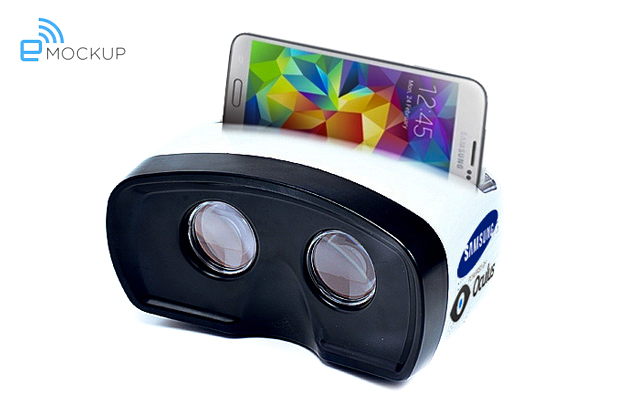
'Cardboard' is Google's attempt at an inexpensive VR headset

LG webOS TV emulator available for PC.

Ever wanted to try LG's webOS for smart televisions, but without buying an LG TV? Fret not, as LG has the answer for you - there's an emulator in the SDK. You can download the SDK from here, and opt to only install the emulator. This is clearly geared towards developers, so there's not a whole lot you can do once you load up the emulator (a VirtualBox image), but for those of you interested in webOS development this is very interesting.


Saturday, June 21, 2014

HEVC , H265 Technical Overview


January 25, 2013, the ITU announced the completion of the first stage approval of the H.265 video codec standard and in the last 1 year several vendors/entities have started to work on the first implementations of H.265 encoders and decoders. Theoretically HEVC is said to be from 30 to 50% more efficient than H.264 (especially at higher resolutions) but is it really that simple ? 

Read the article:
http://sonnati.wordpress.com/2014/06/20/h265-part-i-technical-overview/


Aditional info:
http://en.wikipedia.org/wiki/High_Efficiency_Video_Coding

HEVC defines a “low delay” configuration capable of low latency operation, it's unclear what will be sacrified.  

 In general, HEVC decoders are expected to have 2-3 times the computational complexity of AVC decoders, and HEVC encoders are expected to have up to 10 times the computational complexity of AVC encoders.

Friday, June 20, 2014

Kickstarter: EyeSpeak - Eye tracking augmented reality glasses that revolutionize the hands free interface.


This looks like a cool project. 
  • Epson Moverio BT - 200 - Augmented reality glasses with the possibility of adding prescription lens through a insert setting and two UV shades for added contrast;
  • Eye tracking micro camera;
  • Processing unit;
  • Speaker;
  • Microphone;
  • Controller;
  • Battery.


Voxelo | Voxelogram , free view point video player

http://voxelogram.com/en/voxelo/


Voxelo™ is a Free-Viewpoint Video player for Windows, which enables you to watch full 3D video content of real captured scenes. While traditional 2D video is restricted to the viewpoint of the recording camera, Free-Viewpoint Video allows you to freely choose your viewpoint of the scene during playback.

Ostendo bringing realistic holograms to smartphones

http://video.foxbusiness.com/v/3631868709001/ostendo-bringing-realistic-holograms-to-smartphones/#sp=show-clips

Excellent video clip of their technology.

See earlier post for more info:
  http://videotechnology.blogspot.com/2014/06/new-smartphone-chip-will-beam-high.html

Divemachine's 3D audio tech adds motion-tracking sound to VR headsets


http://www.engadget.com/2014/06/19/divemachine-3d-audio-vr-headsets/

http://www.genetec.co.jp/pdf/dive_machine_20140619.pdf

Amazon Fire Phone Uses 4 IR Cameras for 3D UI


This technology looks a lot like the Leap Motion but instead of two cameras, they are using three.


The Verge, Mashable:

Amazon Fire Phone uses four front-facing IR cameras to create a 3D user interface: "Perhaps the most useful application shown off so far is simply tilting the phone to scroll through a web page like The Washington Post or to page through a Kindle book. Of course, we've seen other tilting features before and they've a lot to be desired, but Amazon's demo seems to make these features seem far better than previous attempts. The question will be whether or not the extra processing power and potential battery life drain to run these multiple cameras will be worth it."

Thursday, June 19, 2014

R/C Plane Flies with a Cockpit View


http://hackaday.com/2014/06/18/rc-plane-flies-with-a-cockpit-view/#more-124767

Oculus Rift + Head Tracking = The Ultimate Drone Experience


http://hackaday.com/2014/06/18/oculus-rift-head-tracking-the-ultimate-drone-experience/#more-124829

Sharp's 'Free-Form Displays' with Ultra-Thin Bezels Make New Display Shapes Possible - Mac Rumors


sharp_free_form_display

Conventional displays are rectangular because they require a minimal width for the bezel in order to accommodate the drive circuit, called the gate driver, around the perimeter of the screen's display area. With the Free-Form Display, the gate driver's function is dispersed throughout the pixels on the display area. This allows the bezel to be shrunk considerably, and it gives the freedom to design the LCD to match whatever shape the display area of the screen needs to be.  

Tuesday, June 17, 2014

Virtual reality / Augmented reality META Pro 3-D Glasses

META Pro

Giant 3D holographic HD screen, 40 deg field of view (15 x Google Glass) Ultra high-end sleek light weight design. Independent pocket computing power.

Deliveries for orders made today start January 2015.

 $3,650.00


http://www.businessinsider.com/meta-3-d-glasses-2014-6

https://www.spaceglasses.com/

There’s a scientific reason your iPhone headphones are always tangled

http://sciencealert.com.au/features/20141706-25696-2.html

MK1 Studio Underbed Plasma HDTV lift


http://www.mk1studio.com/www.mk1studio.com/Welcome.html


Prices range from $13,000 to $20,000 + accessories and installation.


Here's the 4K IMAX Camera That's Going to Make 3D Movies Awesome Again


Here's the 4K IMAX Camera That's Going to Make 3D Movies Awesome Again

Monday, June 16, 2014

free optical motion tracking application for Windows


FreeTrack is a free optical motion tracking application for Microsoft Windows, released under the GNU General Public License. Its main function is inexpensive head tracking in computer games and simulations but can also be used for general computer accessibility, in particular hands-free computing. Tracking is sensitive enough that only small head movements are required so that the user's eyes never leave the screen.

Head motions are tracked with six degrees of freedom (6DOF), specifically; yaw, pitch, roll, left/right, up/down and forward/back. This is done by means of a video capture device, typically a webcam, which is placed in front of the user and tracks a rigid point model headpiece. This point model usually consists of infrared LEDs but can also be normal LEDs and even retroreflective material illuminated by a source of infrared light.

FreeTrack can output head tracking data directly using TrackIR™, SimConnect and FSUIPC interfaces, programs that support these interfaces are regarded as having FreeTrack support. General input devices can also be emulated, specifically mouse, keyboard, and joystick (via PPJoy).


Free Rendor app aims to turn smartphones into 3D scanners.


Sneak Peek! from Replica Labs on Vimeo.

Single camera on a cell phone, providing 3D rendering. Interested in getting it first? Sign up for our closed beta test here: rendor.co/#beta-sign-up 

http://www.3ders.org/articles/20140614-rendor-app-aims-to-turn-smartphones-into-3d-scanners.html

Sunday, June 15, 2014

Drone Knocked Down at Staples Center During LA Kings Stanley Cup Celebra...

Beware videographers, before using a drone to film an audience make sure you have an MC or someone that's communicating to get the crowds cooperation.


It's because of things like this that Free View Point video will ultimately dominate.


Video Editing Co. Magisto Shifts Focus to Business Customers - Venture Capital Dispatch - WSJ

Friday, June 13, 2014

Curved CCDs from Andanta


As Sony presents its curved CMOS sensors, one has to mention that Olching, Germany-based Andanta has first shown its commercially available curved CCDs in 2012. The 2013-dated document presents cylindrically curved FSI devices as standard products, while the spherical ones available on request: The company says: "*The curvature of the image sensor can be designed as a one-dimensional cylindrical curvature or as a two-dimensional spherical curvature (convex or concave). As part of a customized project, scientific front illuminated 4k x 4k (16 Mpixels) - image sensors with convex and ... more »


Sunday, June 08, 2014

Duo3D AudioSight - 3D depth mapping


3D depth mapping announcement comes from Duo3D presenting AudioSight - a software-based solution turning stereo camera into a depth mapping device.

http://duo3d.com/


Youtube video 


http://duo3d.com/product/duo-mini-lv1

They have a dual camera board that does board level  3D sensing utilizing stereo vision, ready to work out of the box supporting a wide range of accessories and configurations. $200 USD


Google's Project Tango using Mantis Vision's Structured Light 3D Camera


Israel based Mantis Vision confirms that its MV4D 3D camera is used in Google's Project Tango tablet.

Mantis Vision camera consists of flash projector hardware components and includes structured light-based depth sensing algorithms like PrimeSense technology used in the Microsoft Kinect and now owned by Apple. PrimeSense is also Israel based.


Amihai Loven, CEO, Mantis Vision said:
"3D represents a major paradigm shift for mobile. We haven't seen a change this significant since the introduction of the camera-phone. MV4D allows developers to deliver 3D-enabled mobile devices and capabilities to the world,"
 "This partnership with Google offers Mantis Vision the flexibility to expand quickly and strategically. It will fuel adoption and engagement directly with consumer audiences worldwide. Together, we are bringing 3D to the masses."

Johnny Lee, Technical Product Lead at Google said:
"We are excited about working with partners, such as Mantis Vision, as we push forward the hardware and software technologies for 3D sensing and motion tracking on mobile devices,"

Sony shows (and tells) us why 4K on a phone isn't crazy

http://www.engadget.com/2014/03/21/sony-xperia-z2-4k/

Looks like 4K cell phone cameras are here, but I have not found anyone making a cell phone 4K display yet.

This is something the VR world needs like the Oculus Rift and Samsung an other face mounted screens based HMD's.


Saturday, June 07, 2014

SkySapience Hovermast

http://www.skysapience.com/products/the-hovermast-100

Sky Sapience's HoverMast-100, tethered hovering machine,
Rising to heights of up to 50 meters within 15 seconds it is secured by a cable, serving as a power supply and wideband data link. The stabilized platform is capable of carrying any payload of up to 6 kg.

The HoverMast is able to host a large variety of payloads such as CCD/IR cameras, radars, laser designators, relays, cellular antennas, and hyperspectral sensors.


​

A Sidewalk Disappearing Act


Good article on how Google is using image processing of multiple camera views to remove people from Google map images. 

http://www.technologyreview.com/news/420187/a-sidewalk-disappearing-act/


This is also know as diminished Reality: 


This can be done to live Full HD  images in real time, so you can't trust your CCTV cameras from any group with this level of technology that could be done for $99 of off the shelf chips. 


Bot & Dolly - Video Mapping


Box by Bot & Dolly - Video Mapping

Box explores the synthesis of real and digital space through projection-mapping on moving surfaces. The short film documents a live performance, captured entirely in camera. 

Bot & Dolly produced this work to serve as both an artistic statement and technical demonstration. It is the culmination of multiple technologies, including large scale robotics, projection mapping, and software engineering. We believe this methodology has tremendous potential to radically transform theatrical presentations, and define new genres of expression.

Find out exactly how "Box" was created in our exclusive behind the scenes video: 
http://www.youtube.com/watch?list=PL6...

http://www.botndolly.com/box


Box by Bot & Dolly | Behind the Scenes


Published on Oct 1, 2013 A behind the scenes look at Box, Bot & Dolly's wildly popular latest live performance film which documents a first-ever live synchronized performance using 3D projection mapping, robots, and actors.D projection mapping, robots, and actors.

Thursday, June 05, 2014

The PhoneStation uses your smartphone as a head-mounted display


View Phone Technology, an obscure Taiwanese company, has a head-mounted 3D display that puts content from your phone directly before your eyes. Named the PhoneStation converts video to 3D, letting you use any handset to stream movies and TV shows directly from YouTube.

Tuesday, June 03, 2014

U.S. Spies Summon Star Wars for 3-D Hologram Displays | Danger Room | WIRED

http://www.wired.com/2012/08/iarpa-holograms/

New smartphone chip will beam high-definition holograms as early as 2015


http://ostendo.com/press/wsj.php

http://ostendo.com/

Ostendo, then your next handset could be capable of just that. Thanks to breakthroughs by the Californian display startup, 5,000ppi projectors the size of Tic Tacs 

5000 ppi is 5um pixel size which is typical for DLP displays today. 

Solid State Light (SSL) based display technologies, Not sure what that means.

Quantum Photonic Imager?

The present invention relates to emissive imager devices comprising a monolithic semiconductor arrays of multicolor laser emitters that can be used as an image sources in digital projection systems.

https://www.google.com/patents/US20130141895
Directional light modulation, 3D displays, emissive micro displays, 2D/3D autostereoscopic switchable displays.

A Sidewalk Disappearing Act | MIT Technology Review

Monday, June 02, 2014

ImmerVision | The 360° Video Standard

https://www.immervisionenables.com/

360° Panomorph optics

Valve's simplified VR prototype ditches the QR code-laden room

http://www.engadget.com/2014/06/02/valves-simplified-vr-prototype/

Novafora Shuts Down, Selling Transmeta IP

http://www.pehub.com/2009/07/novafora-shuts-down-selling-transmeta-ip/

Earlier this year, video processor startup Novafora Inc. boldly acquired publicly-listed Transmeta Corp. for $255 million. A few months later, company CEO Naki Rakib and VC backer Robert Genisier (Vertex Capital) rang the opening bell on the New York Stock Exchange. Yesterday, the San Jose, Calif.-based company shut its doors.

Sunday, June 01, 2014

Fiberio tabletop touchscreen can read fingerprints

Mobile device and computer security are of serious concern in today’s world (just ask the NSA). Leaving these devices in public can lead to a host of problems including unwanted access to bank accounts, fraudulent use of Social Security numbers, and unwanted guests at both work and home.
Currently there are security measures in place that can keep unwanted visitors out of your digital world, the most basic being passwords, which can easily be hacked. Other more advanced methods of security include retina and fingerprint scanners that identify a particular user to grant access to sensitive materials. These systems are standalone devices that were not typically integrated into any system, mobile device, or touchscreen until now.
Researchers from the Hasso Plattner Institute in Germany have developed a touchscreen that is capable of identifying the fingerprints of its users. The problem with incorporating a fingerprint reader is that most fingerprint readers (or biometrics) rely on light to capture the unique patterns on people’s fingers, and most touchscreens can't sense light, but rather function using capacitive or resistive technology that senses pressure when touched.
The team, led by Christian Holz and Patrick Baudisch, developed the Fiberio tabletop touchscreen in an effort to combine both technologies together for an ultra-secure interface that can be used by the public. The touchscreen uses a new screen material known as large fiber optic plate, which is comprised of millions of 3mm-long optical fibers bundled together in the form of a platter. This both diffuses projected light and reflects it at the same time, making it ideal as a touchscreen with the reflection needed to read fingerprints.
The screen itself sits atop an aluminum stand with a projector housed underneath the screen itself. An IR (infrared) illuminator is housed adjacent to the projector, which illuminates the user’s fingerprints and reflects the images to a high-resolution infrared camera that identifies not only finger/hand location, but hovering objects, as well. The screen has the potential to be used in myriad places and projects that require a certain level of security.
The team envisions the technology could be used in banking institutions for approving loans (requiring more than just a signature) or used as tables in coffee shops, allowing patrons to answer emails, surf the Web, or hone their writing skills without the need for passwords.


Thursday, May 22, 2014

Fwd: Are you an expert in producing online video?


---------- Forwarded message ----------
From: Streaming Media <Streaming.Media@emediapro.com>
Date: Wednesday, May 21, 2014
Subject: Are you an expert in producing online video?


Click here to view this message as a web page.
Streaming Media Producer Live
Call for Speakers Open

The Streaming Media Producer Live conference is a 2-day event designed to bring together independent producers, videographers, corporate videographers, and marketing teams to showcase the many ways they can create, use, and monetize online video. The conference will include expert instruction on key video production techniques for both live and on-demand online video, and strategies for creating audience-focused online videos that communicate their message dynamically and effectively.

If you?re interested in submitting a speaking proposal on a technical or strategic aspect of professional online video production?live or on-demand?you?ve come to the right place.

Submit your proposal!


Flat Panel Display Market Research Reports - Technology & Media Industry Analysis

http://www.marketresearch.com/map/research/flat_panel_display/936.html

50 Nokia Lumia 1020 Cameras Capture New York City in Bullet Time

http://petapixel.com/2014/05/21/50-nokia-lumia-1020-cameras-capture-new-york-city-bullet-time/

David Brin on sousveillance